Axia
Industry
Banking
Client
E-banking
Service
Figma, Miro, Google Analytics, A/B Testing
Date
March 2025
Axia is a Fintech mobile app built around one insight: most banking apps are designed for compliance, not for people. The result? High drop-off, low engagement, and users who avoid their own financial data.
My goal was to design an experience that makes personal finance management feel natural, rewarding, and habit-forming — without sacrificing the trust and clarity that financial products demand.
The Problem
Interfaces built for bank workflows, not user goals
No onboarding guidance for financial beginners
Zero motivation to build lasting financial habits
Financial education buried or absent entirely
Low retention as a result
Solution
User Personas

Sofia
Goals
Save money for big purchases (travel, housing).
Increase income through smart financial strategies.
Frustrations
Struggles with managing finances and lacks time for financial education.
Finds financial planning boring and time-consuming.
Needs
Saving: Wants to save money for future goals.
Learning: Interested in improving financial literacy and investing in stocks, bonds, or other assets.
Convenience: Seeks an all-in-one solution for managing finances.
Goals
Set up a reliable bank account for crypto transactions.
Invest in digital currencies and improve financial management.
Frustrations
Difficulty finding a trusted wallet for crypto.
Loses money due to lack of knowledge about cryptocurrency and time-consuming transfers.

Nicolas
Needs
Learning: Interested in learning about new cryptocurrencies and how to invest in them.
Convenience: Wants to manage all financial activities in one application.
How Personas Shaped Design?
User personas were instrumental in shaping the design of AXIA. By focusing on real user frustrations and motivations, I was able to create a user-centered design that truly met their needs. For example, Sofia’s desire for simple saving tools led to the integration of visual financial analytics and goal tracking, while Nicholas’ interest in crypto inspired the development of gamified lessons and crypto trading features.
These personas also served as a guiding framework for validating key features like rewards systems, financial literacy modules, and crypto integrations, ensuring they were both relevant and useful to the target audience.
Incorporating these personas into the design process resulted in a more engaging, effective, and personalized user experience that directly addressed user needs.
UX Solutions & Features
Main screen
The Main Screen provides quick access to essential features, including a real-time financial overview with Account Balance, a visual breakdown of spending through Expense Analytics, and convenient tools like Quick Actions for transfers, currency exchange, and transactions. It also offers Payment Reminders to alert users about upcoming bills. The clean and minimal design ensures intuitive navigation and a seamless user experience.
Awards

This system turns routine financial actions into engaging challenges with real benefits.
Crypto (Portfolio)
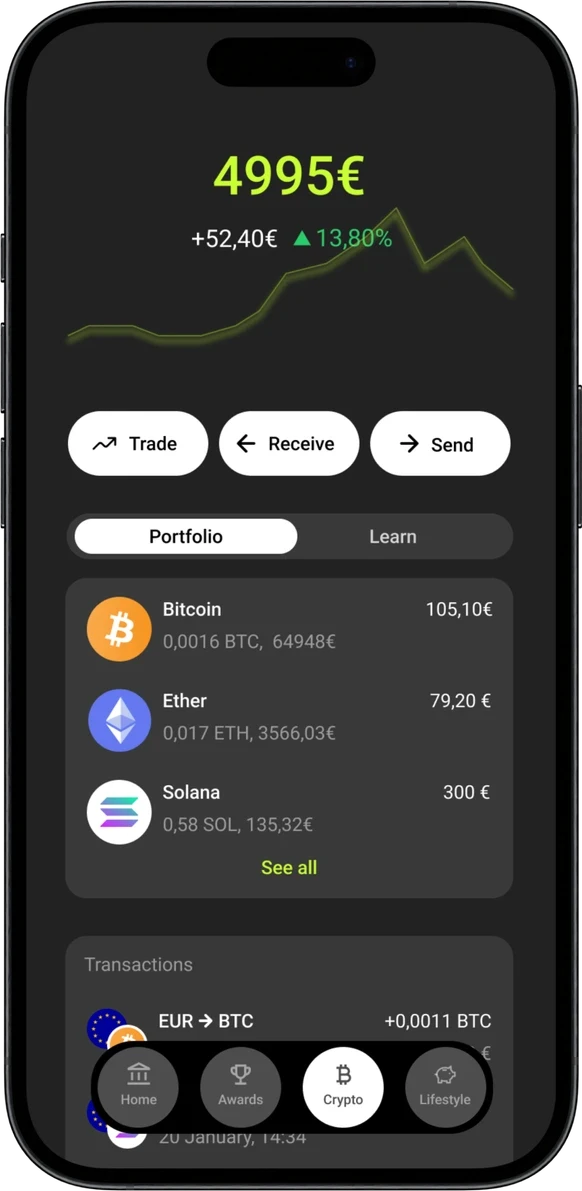
The Portfolio section offers a comprehensive overview of crypto assets, including a Balance Summary with real-time value updates, Performance Tracking through visual charts of gains and losses, and a detailed Transaction History of crypto trades and transfers. Designed with clarity in mind, it enables users to monitor and manage their investments effortlessly.
Crypto (Learn)
Crypto Learn operates by guiding users through an engaging and rewarding educational process about cryptocurrency. Users start by selecting a cryptocurrency, such as Bitcoin, Ethereum, or Litecoin, to focus on. The platform presents step-by-step lessons that break down key concepts into simple explanations, often enhanced with visuals to make learning more accessible.
To ensure understanding, interactive quizzes follow each lesson, allowing users to test their knowledge and reinforce what they’ve learned. As they progress and complete all levels, users earn rewards, such as bonuses or crypto credits, which are added to their portfolio. This approach makes learning about cryptocurrency interactive, enjoyable, and beneficial for users at any level of expertise.
Lifestyle
Assessment
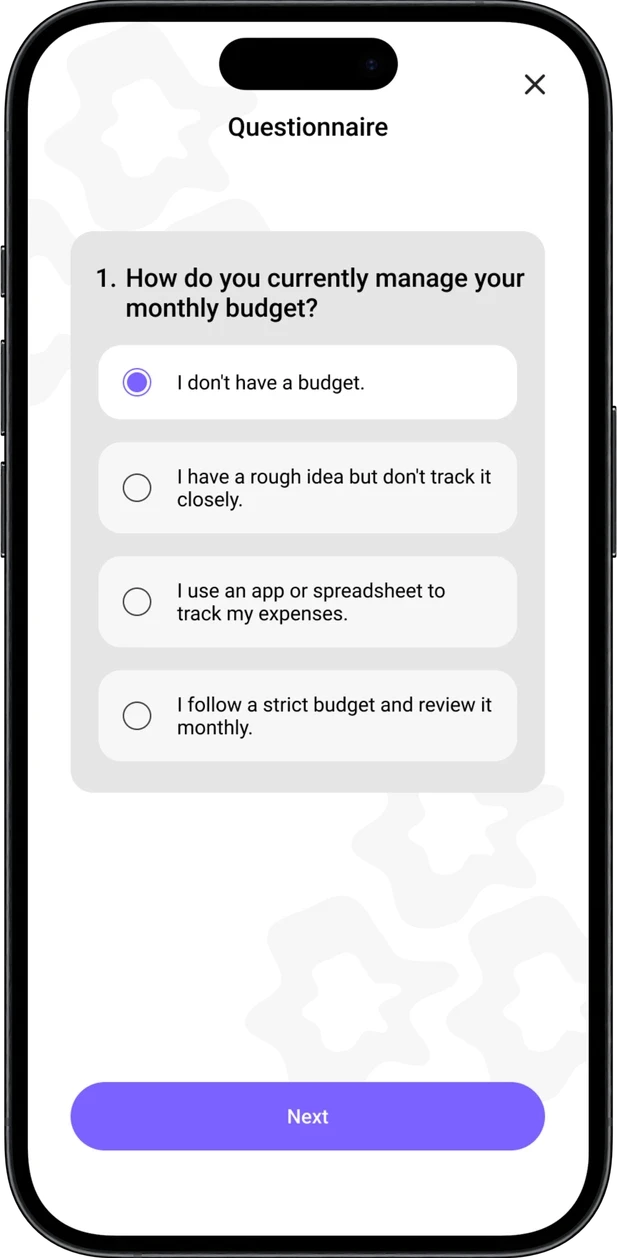
Users begin with a financial literacy test to evaluate their current knowledge and identify areas for improvement.
Personalized Insights
Based on the results, the app provides tailored recommendations and strategies for saving, investing, and managing expenses.
Interactive Learning
Users access bite-sized, gamified lessons designed to teach financial concepts through real-life examples and engaging tasks.
Progress Tracking
Achievements and progress are visualized, motivating users to complete lessons and adopt better financial habits.
This step-by-step process makes financial improvement simple, actionable, and rewarding.

What the design validated:
Gamification increases engagement with financial tools — users who completed even one lesson module were significantly more likely to return to the app and explore other features.
A clear visual hierarchy reduces anxiety in Fintech — users reported feeling "more in control" of their finances when data was presented progressively rather than all at once.
Personalization is a retention lever — users who completed the Lifestyle Assessment were more likely to set financial goals and act on app recommendations.
Key design learning: In Fintech, trust and delight are not opposites. The right gamification doesn't trivialize money — it makes engaging with it feel achievable.

